

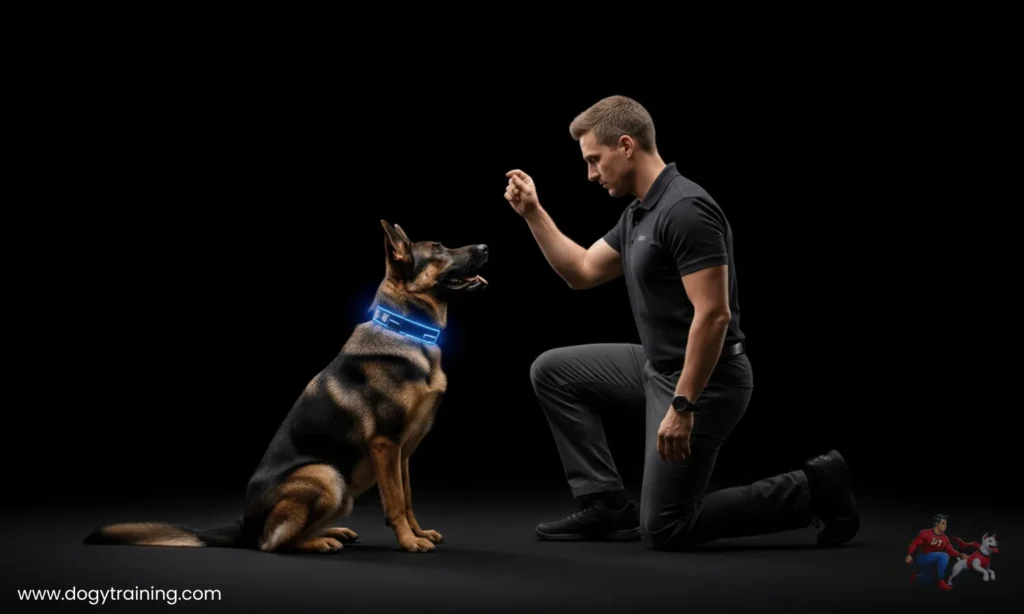

Training your dog to sit is one of the most essential skills for both puppies and adult dogs. A reliable sit command helps manage behavior, prevents jumping, improves leash manners, and forms the foundation for advanced training like stay, come, or drop. Teaching this simple yet powerful command strengthens the bond between you and your dog, builds confidence, and promotes calmness in everyday situations.
In this article, we will guide you through step-by-step methods, expert tips, and practical strategies to teach your dog to sit reliably.
Key Takeaways
- Sit is a basic command that improves behavior and safety.
- Dogs learn best with clear cues and positive reinforcement.
- Follow the step-by-step training process: attention, lure, mark, cue, release.
- Use Duration, Distance, and Distraction to build reliability.
- Patience and consistency fix common sit problems.
- Practice daily and reward real-life situations to strengthen obedience and the bond.
Understanding How Dogs Learn

Dogs learn by associating cues, actions, and rewards. Luring, shaping, and capturing are three primary training methods. Luring guides your dog into position using treats or toys and shaping rewards incremental movements toward a correct sit, while capturing and reinforcing spontaneous sits.
Understanding your dog’s learning style prevents confusion, frustration, and behavioral issues. Dogs interpret verbal and visual cues differently, so clarity, timing, and consistency are critical.
Step-by-Step Guide to Teaching Your Dog to Sit
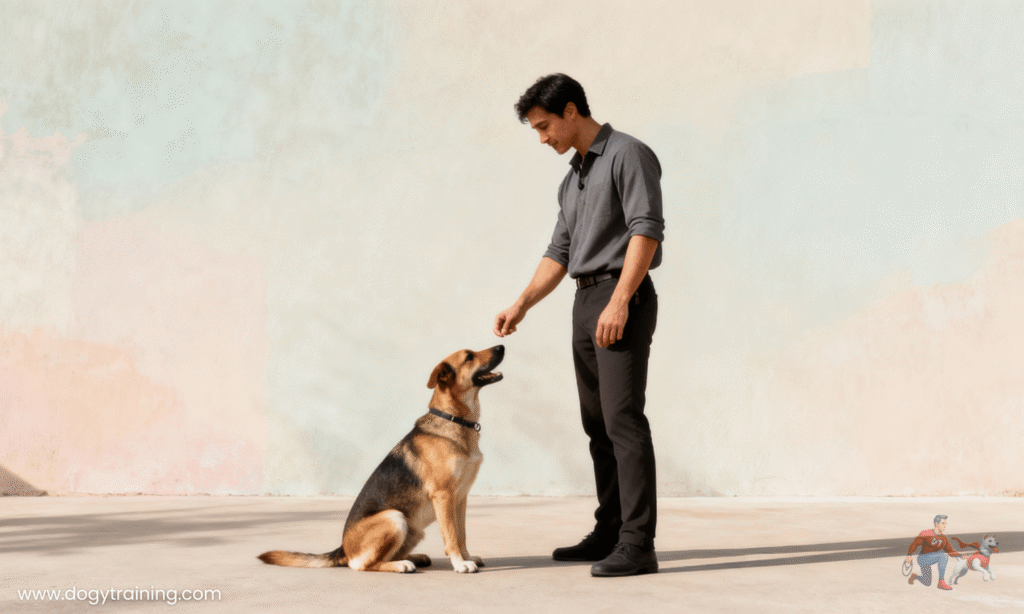
Teaching your dog to sit doesn’t have to be complicated. Follow these simple, easy-to-implement steps to get your dog sitting reliably in no time.
Step 1. Gain Your Dog’s Attention
Before training, ensure your dog is calm and attentive. Call their name softly and maintain eye contact. Over-excitement or shouting can distract or stress your dog, reducing learning efficiency.
Step 2. Use a Lure to Guide the Sit
Hold a treat in front of your dog’s nose and slowly move it upward and slightly backward over their head. Most dogs naturally follow the movement, lowering their rear to the floor. Using a hand motion as a visual cue reinforces understanding while keeping the process force-free.
Step 3. Mark the Correct Position
The moment your dog’s rear touches the ground, mark the behavior verbally with “Yes,” “Good,” or a clicker, then immediately reward with a treat or praise. Correct timing ensures your dog links the sit with the positive outcome.
Step 4. Introduce the Verbal Cue
Once your dog reliably follows the lure, add the word “sit.” Say it just as your dog moves into position and reward immediately. Avoid repeating the cue multiple times, as this can confuse the dog and weaken learning.
Step 5. Teach a Release Cue
Introduce a release command like “OK,” “Free,” or “Release,” so your dog understands when it’s acceptable to move. This step prevents early breaks, reinforces control, and establishes a clear communication pattern between you and your dog.
Building Reliability Using the 3 D’s

Consistency is key to making your dog’s sit command reliable. Learn how Duration, Distance, and Distraction help your dog respond perfectly every time.
Duration
Gradually increase the time your dog holds a sit. Start with a few seconds and extend to a minute or more. This builds patience, focus, and self-control.
Distance
Practice the sit command while moving away from your dog. Begin with one step and increase gradually. This ensures obedience even when you are not immediately next to your dog.
Distraction
Introduce controlled distractions such as other people, pets, or outdoor noises. Practicing sits in varied environments reinforces reliability and helps your dog respond calmly in real-life situations.
Troubleshooting Common Sit Problems
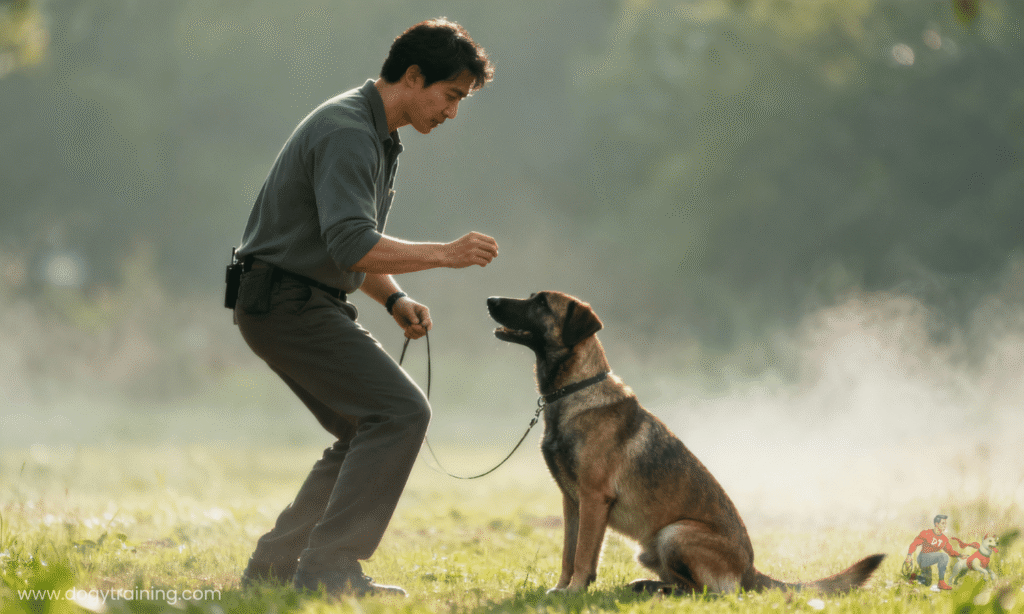
Some dogs may only sit with treats, stand too quickly, ignore verbal cues, or sit crookedly. These issues often arise from unclear cues, inconsistent timing, or distractions. Adjust your method, break the task into smaller steps, and reward any correct approximation.
Remember, no dog is stubborn. They need clear instructions and patient repetition. Consistent practice and positive reinforcement will overcome these challenges, ensuring your dog performs a reliable sit in any environment.
Expert Tips for Long-Term Success
To ensure your dog maintains a reliable sit command over time, follow these expert tips:
- Keep training sessions short and frequent: 5–15 minutes daily to maintain focus and motivation.
- Reward real-life sits: Reinforce sitting during everyday activities, not just formal training sessions.
- Avoid overusing the cue: Saying “sit” too often can confuse your dog; use it strategically.
- Refresh training periodically: Practice the command in different environments to prevent regression.
- Use clear and consistent cues: Verbal commands and hand signals should remain the same each time.
- Gradually increase challenges: Extend duration, distance, and distractions step by step.
- Be patient and repetitive: Consistency and positive reinforcement build a strong, reliable sit.
- Focus on bonding: Training should strengthen trust, confidence, and communication between you and your dog.
Conclusion
Teaching your dog to sit is a fundamental step in creating a well-behaved, confident, and safe companion. This simple command provides control, improves obedience, prevents accidents, and forms the basis for advanced training like stay, come, and drop.
By using clear cues, positive reinforcement, short, consistent sessions, and gradually increasing duration, distance, and distractions, your dog will learn to sit reliably in everyday situations. A strong sit command strengthens communication, builds trust, and ensures a happier, safer life for both you and your dog.
FAQs
Yes, dogs can learn to sit without food rewards. Use toys, play, or praise as motivation. Positive reinforcement still applies, rewarding behavior your dog values to encourage repetition.
The time varies by dog’s age, breed, and temperament. Puppies may learn in a few days with short, frequent sessions, while older dogs may take several weeks.
Absolutely! Adult dogs can learn or refine the sit command at any age. Adjust your approach based on energy levels, distractions, and comfort.
Start with your dog lying down and lure or guide them into a sit using a treat or toy. Reward immediately when they sit correctly.
Correct posture matters for health and obedience. Ensure the dog’s hocks are tucked under the hips, and the front paws stay still.
Use intermittent rewards rather than giving a treat every time. Reinforce sitting during real-life situations, like greeting people or before meals, to teach the dog that sitting is valuable beyond just getting food.
