

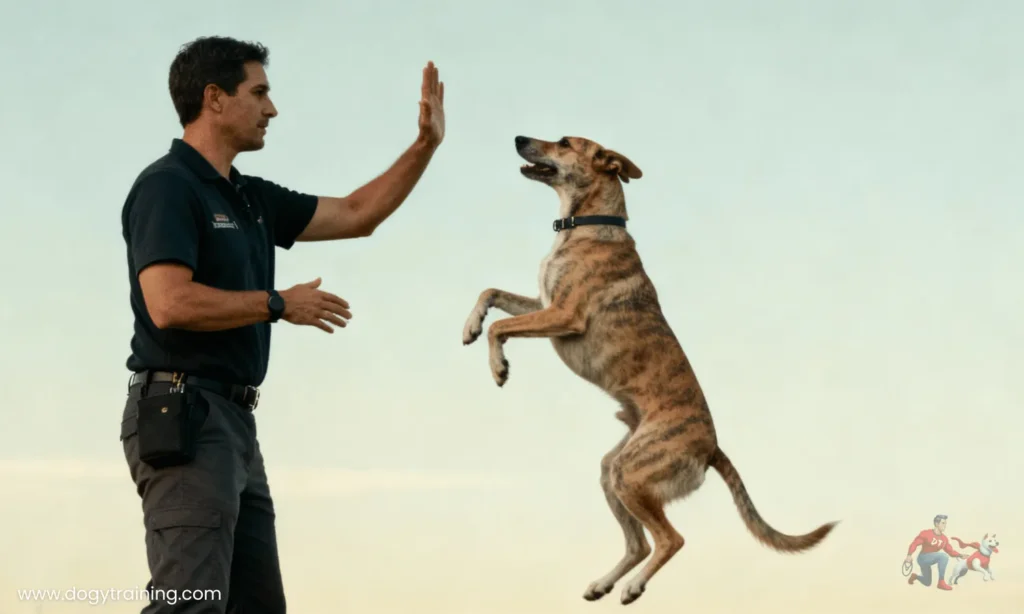

Dogs jumping up on people is a very common problem for pet owners. Whether it’s a small puppy or a full-grown dog, this behavior can be frustrating, embarrassing, and sometimes even dangerous. Dogs jump to greet, seek attention, or express excitement. While it may seem cute when they are little, a jumping dog can scratch someone, knock over a child, or make visitors feel uncomfortable.
In this article, we will cover why dogs jump, detailed training steps, useful tools, & common mistakes to avoid.
Key Takeaways
- Dogs jump mainly to seek attention, express excitement, or because of nervousness.
- Ignore jumping and reward four paws on the floor consistently.
- Teach alternative behaviors like sit, down, or stay to replace jumping.
- Use controlled greetings, treat games, and enrichment activities to reinforce calm behavior.
- Avoid punishment, inconsistent rules, and chaotic greetings to ensure long-term success.
Step-by-Step Guide to Train Your Dog Not to Jump Up

Teaching your dog not to jump requires a structured, step-by-step approach. Follow these practical steps to gradually train your dog, ensuring lasting results and safer interactions.
Step 1. Remove Reinforcement for Jumping
The first step is to stop rewarding the jumping behavior. When your dog jumps, turn your back, avoid eye contact, and remain calm.
Only give attention when all four paws are on the ground, using gentle praise or a small treat. Every family member must follow this rule to reinforce calm greetings effectively.
Step 2. Teach an Incompatible Behavior
Dogs cannot jump while performing another action, making commands like “sit” or “down” ideal alternatives. Practice in a quiet space, rewarding your dog immediately when they comply.
Gradually extend the duration and apply the command during usual jumping situations, helping your dog build self-control and understand acceptable behavior.
Step 3. Controlled Greetings
Use a leash or houseline when introducing your dog to new people. Ask visitors to ignore the dog until it stays calm with all paws on the floor. Treats or toys placed on the ground can redirect focus, teaching your dog to greet politely.
Repeating controlled greetings helps your dog generalize this behavior in real-world situations.
Step 4. Redirect Energy with Treats and Games
Redirecting excitement through interactive games prevents jumping. Toss treats on the floor, or provide chew toys, Kongs, or lick mats to keep your dog engaged.
These activities give your dog an alternative outlet for energy, reinforce calm behavior, and reduce frustration during high-stimulation moments like visitor arrivals or walks.
Step 5. Exercise and Mental Enrichment
High-energy dogs often jump due to pent-up excitement. Focus on slow, sniff-based walks in fields or woodlands rather than fast-paced running.
Combine this with enrichment games like “find it” or “paws up,” and use puzzle feeders or obedience drills. Mental and physical stimulation together enhance self-control and calmness, reducing the likelihood of jumping.
Step 6. Gradual Practice in Real-Life Situations
Training must extend beyond controlled environments. Gradually introduce guests, strangers, and outdoor distractions while maintaining leash control if needed. Reward calm behavior consistently and progressively increase the challenge.
Over time, your dog will generalize the “four paws on the floor” rule in all settings, ensuring polite and safe greetings everywhere.
Step-by-Step Guide to Train Your Dog Not to Jump Up
Training your dog not to jump requires patience, consistency, and clear communication. Avoiding these common mistakes will help you achieve faster and longer-lasting results:
- Grabbing, pushing, or kneeing the dog
- Rewarding jumping with attention or treats
- Inconsistent rules among family members
- Chaotic or overly excited greetings
- Using punishment or harsh words
- Rushing the training process
- Skipping practice in different environments
Training Tools to Support Learning
Using the best apps or tools can make training your dog not to jump more effective, safe, and stress-free. These tools support learning by guiding behavior rather than punishing your dog:
- Gentle Leader Headcollars: Provide control on walks without putting strain on your dog’s neck, making leash handling easier and safer.
- Baby Gates and Crates: Help manage your dog during visitor arrivals or high-energy situations, allowing them to settle before interactions.
- Treats and Food Rewards: Small, soft treats reinforce calm behavior and encourage four-paws-on-the-floor greetings.
- Chew Toys, Kongs, and Lick Mats: Serve as distractions to redirect energy and promote self-calming, especially during high-excitement moments.
- Houselines or Longlines: Offer outdoor control during walks or park visits, helping your dog remain calm while still exploring.
Conclusion
Training your dog not to jump up takes patience, consistency, and understanding. By removing reinforcement for jumping, teaching incompatible behaviors like sit or stay, and using controlled greetings, you help your dog learn calm, polite interactions.
Advanced techniques, mental enrichment, and gradual real-life practice reinforce positive habits, while avoiding common mistakes ensures trust and safety. Every family member must follow the same rules, and rewarding good behavior consistently helps your dog understand expectations.
FAQs
It depends on the dog’s age, history, and consistency of training. Puppies may learn in a few weeks, while older dogs might take several months.
Yes. While it may take longer, consistent reinforcement, alternative behaviors, and controlled greetings can train adult dogs effectively.
Yes, treats are safe when used in moderation. Always adjust daily food intake to avoid overfeeding.
Use a leash, crate, or baby gate to manage energy. Redirect attention with a “sit” command or treat games until calm.
Yes. Even small dogs can scratch, scare children, or damage furniture when jumping. Training applies to all sizes.
