

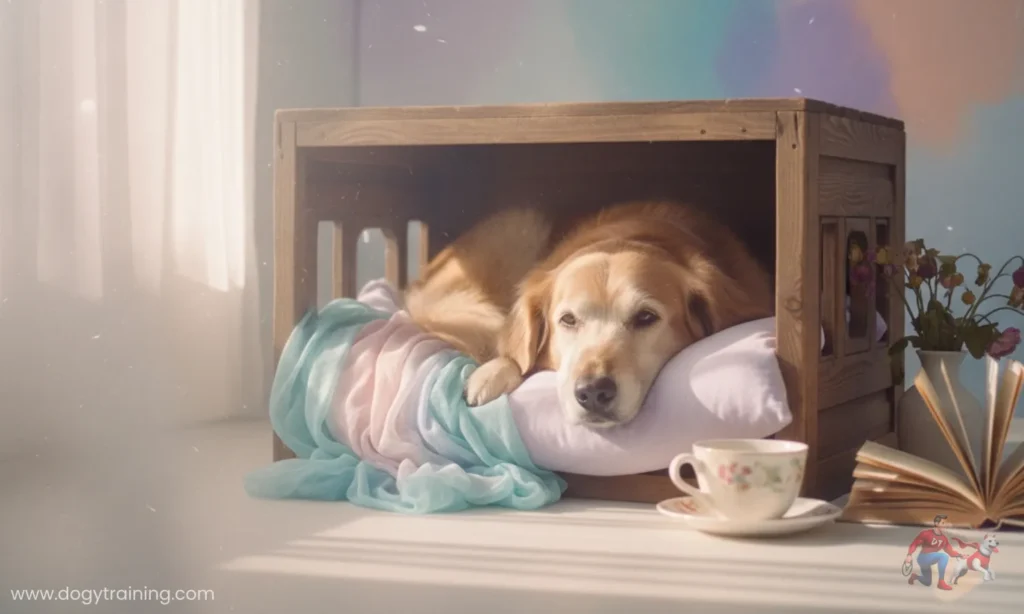

Many adult dogs have strong habits, so a new routine can feel unfamiliar at first. You will learn a simple step-by-step method that help to crate train your older dog, stay calm, comfortable, and confident.
The focus is to make the crate a safe and peaceful place rather than something your dog fears. With slow progress and the right environment, even a mature dog can enjoy resting in a cozy crate.
In this article, you will cover everything from setup to training to solving small problems along the way.
Key Takeaways
- Older dogs learn best with slow, gentle crate training.
- A comfortable setup helps dogs feel relaxed.
- Short, positive sessions build trust quickly.
- A steady routine supports long-term success.
- Crate training gives older dogs a peaceful personal space.
Why Crate Training Helps Older Dogs
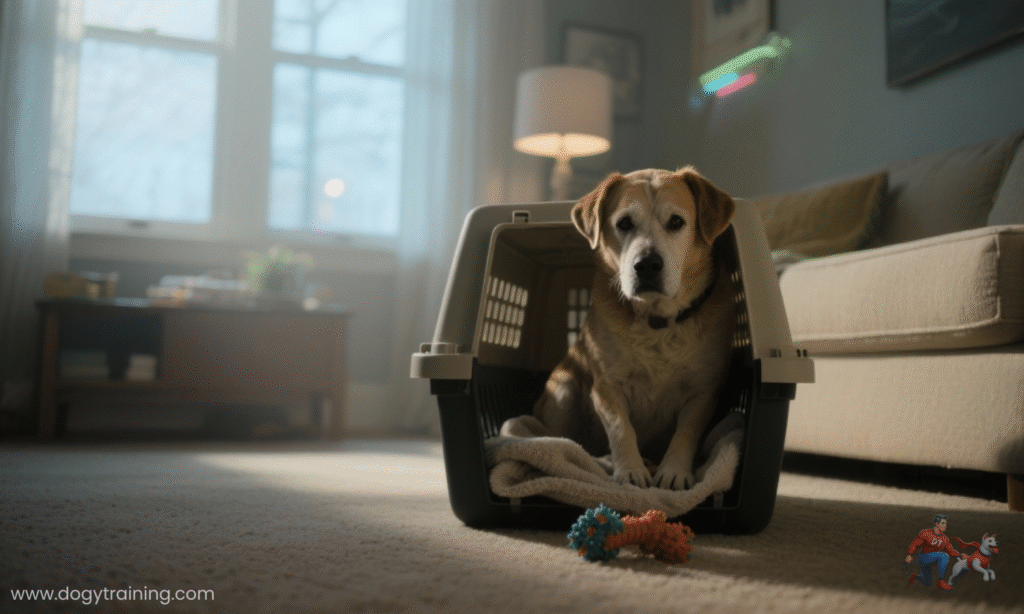
Understanding the purpose of crate training makes the whole process easier. Many older dogs enjoy having a quiet personal space where they can relax without noise or interruption.
A crate works like a small bedroom for the dog, helping them feel secure when the house is busy. It can support dogs who become stressed during loud moments or when new guests arrive.
A crate also helps with nighttime rest, travel safety, and creating a predictable daily routine. Trusted dog care resources, including the American Kennel Club, highlight that calm spaces can reduce stress in adult dogs.
Helpful Items for This Stage
- A soft blanket with your dog’s natural scent
- A comfortable dog bed that fits inside the crate
- A light crate cover for quieter rest
- A safe chew toy to help your dog relax
- A long-lasting treat to reward calm behavior
Steps to Crate Train an Older Dog
Before preparing the crate area, it helps to understand the basic steps involved in training an older dog. These steps give you a clear roadmap so you know what will happen throughout the process.
1. Setting Up the Right Crate Environment
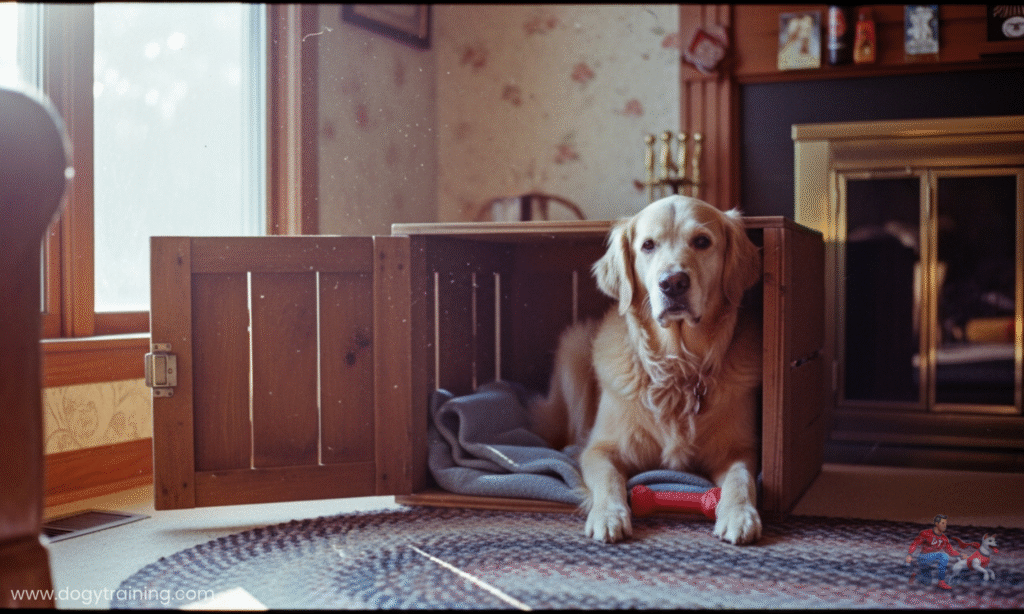
A good setup is the first real step when learning how to crate train an older dog. The crate should feel warm, soft, and inviting.
Place it in a peaceful corner of your home where your dog can rest without too much noise. Make sure the crate is large enough for your dog to stand, stretch, and turn comfortably. Add soft bedding to protect older joints, especially if your dog is a senior.
A familiar-smelling item, such as a used shirt, can make the space feel more comforting. Following guidance from the Humane Society, a crate should always represent safety and comfort, never punishment.
Things Needed for the Setup
- A crate size suitable for your dog’s height and length
- Washable bedding for easy cleaning
- A bowl holder for fresh water
- A mat under the crate to prevent slipping
- A breathable crate design for good airflow
2. Introducing the Crate Slowly and Calmly
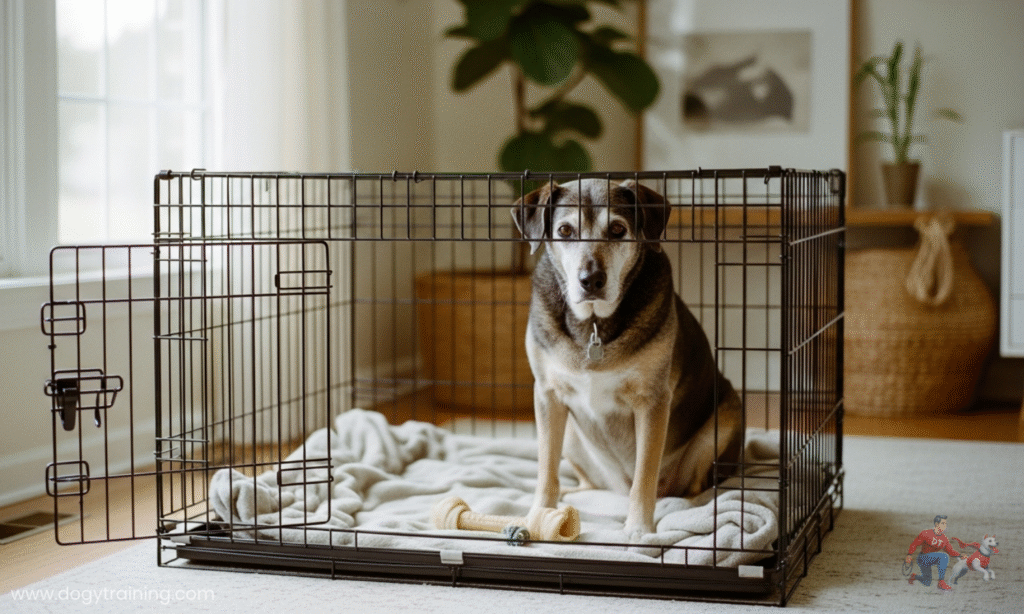
The beginning of training should be gentle. Older dogs need time to understand that the crate is a friendly place.
Keep the crate door open in the early days and let your dog explore it freely. Place treats near the entrance so your dog can sniff and approach at their own pace. Add praise whenever the dog steps even slightly into the crate.
After the dog becomes comfortable, you can place treats deeper inside. Once your dog enters with confidence, start closing the door for very short moments. The ASPCA recommends short, positive sessions to keep the dog comfortable.
Useful Tools for the Introduction Stage
- Small bite-sized treats
- A clicker, if you use clicker training
- A gentle-smelling calming spray
- A night-light if your dog is afraid of the darkness
- A treat pouch to keep rewards ready
3. Building a Calm and Predictable Crate Routine
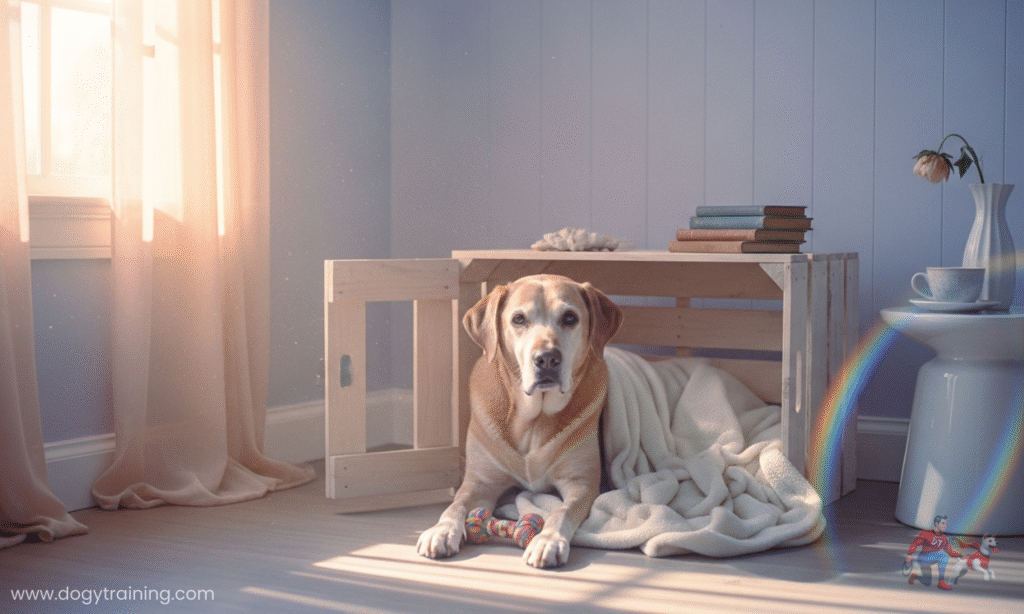
Once your dog is used to the crate, it is time to build a daily routine.
Older dogs feel more relaxed when they know what to expect each day. Use the crate during natural rest times, such as after meals or short walks. Keep the sessions short in the beginning and slowly increase the time.
Make sure your dog always enters the crate calmly instead of rushing or being pushed. A soft voice and relaxed movements help your dog feel safe. Keeping the routine steady every day creates trust and confidence.
Helpful Routine Items
- A simple daily schedule chart
- A timer or alarm to track session lengths
- A journal to record progress
- A lightweight crate door latch for quiet closing
- A soft toy meant only for crate time
4. Solving Common Crate Training Challenges
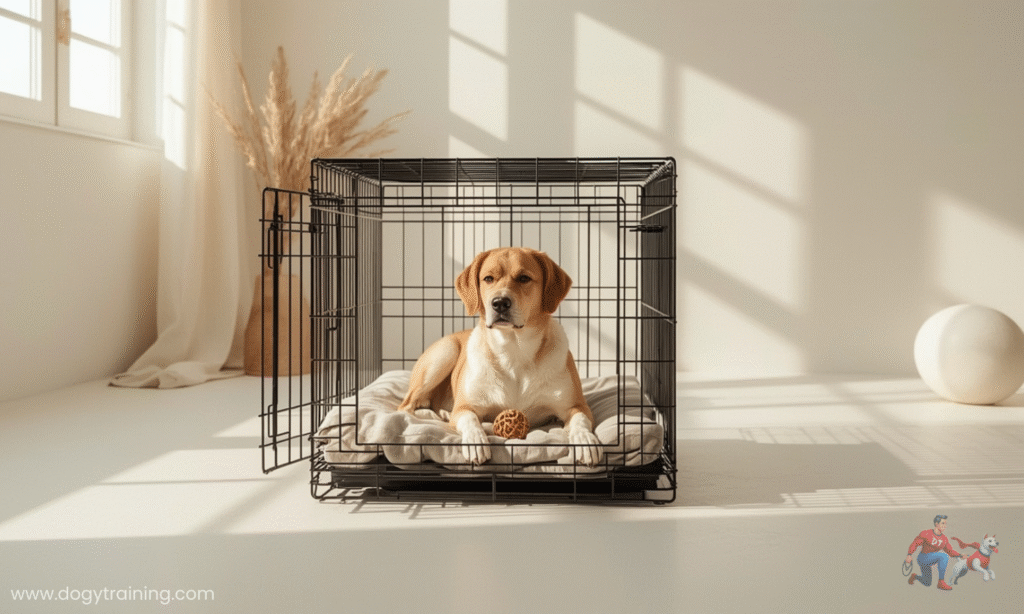
Some older dogs may show hesitation during crate training. They may stand at the entrance, whine lightly, or try to walk away.
These reactions often mean the dog needs more time or smaller steps. Try returning to very short sessions and increasing comfort with extra praise. Make the crate more enjoyable by placing meals inside for a while.
Move the crate to a quieter location if your dog seems distracted or nervous. The International Association of Animal Behavior Consultants encourages slow progress when working with adult dogs who have past stress or fear.
Helpful Support Items
- Special high-value treats
- Soft music or white noise for calming
- A raised food bowl for older dogs with neck discomfort
- A second crate mat for quick changes
- A travel crate for practice in different rooms
5. Helping Your Dog Stay Confident Long Term
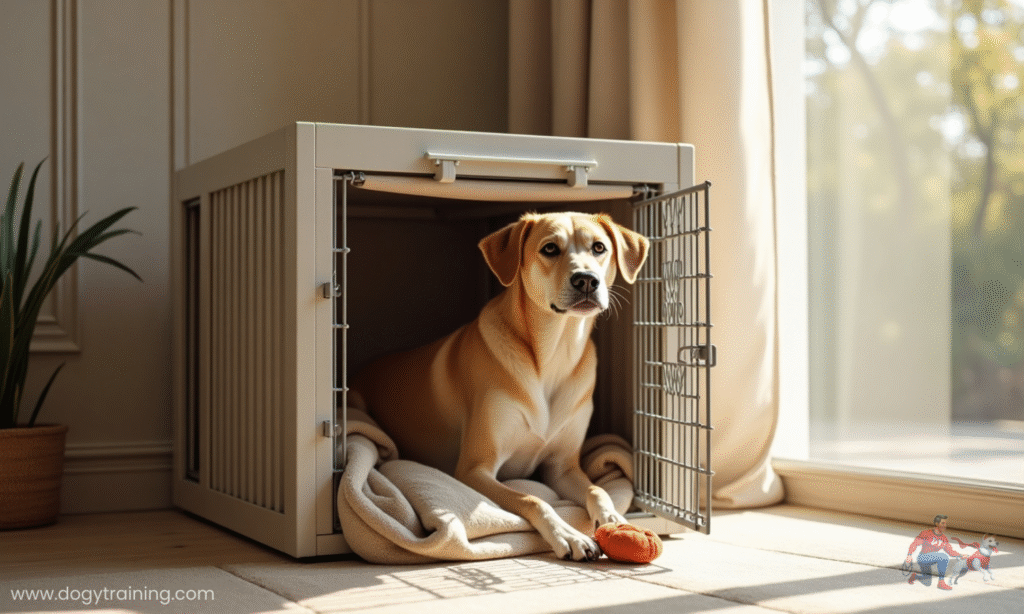
The final step is keeping the crate a positive space as time goes on.
Use the crate only during calm or resting moments so your dog continues to like it. Keep the inside clean and fresh to maintain comfort. Offer quiet time in the crate a few times each day to keep the habit steady.
Allow your dog to enter naturally instead of forcing entry. With ongoing kindness and patience, your mature dog will stay confident and happy using the crate.
Items Needed for Ongoing Success
- Fresh bedding replacements
- A washable crate pad
- A regular cleaning cloth for quick wipe downs
- A soft comfort toy kept in the crate
- A natural-scent fabric refresher
Conclusion
Learning how to crate train an older dog becomes simple when you move slowly and keep everything positive. With the right environment, gentle steps, and a calm routine, your dog can learn to feel safe and happy inside the crate.
Start with easy introductions, build comfort gradually, and use the crate only for peaceful rest. You can begin today and help your dog enjoy a cozy personal space that supports healthy habits. If you stay patient and consistent, your older dog will adjust beautifully.
Frequently Asked Questions
Yes, older dogs can learn crate training very well when the steps are slow and gentle. With patience and comfort, they adjust just like younger dogs.
Training time is different for every dog, but most older dogs understand the routine within a few weeks. Calm sessions and steady practice help them learn faster.
Yes, your dog can sleep in the crate if the space feels soft, warm, and safe. Make sure your dog is relaxed before closing the door for the night.
Crying means your dog needs slower steps or more comfort. Try shorter sessions, add a familiar-scent item, and give more praise when your dog stays calm.
Older dogs should stay in a crate only for short periods during the day. They need regular breaks for stretching, walking, and bathroom needs.
